How to Talk to a Grieving Child: What to Say (and What Never to Say)
A practical guide to helping a grieving child feel safe, heard, and loved

When a child loses a parent, the adults around them usually want to help. They just don’t know how.
We know how to comfort a widow. We bring food, we sit with her, we tell her we’re sorry. Then her eight-year-old walks into the room and most of us freeze, or reach for the first thing that comes to mind, which is usually the wrong thing.
Children grieve as deeply as adults do. They just show it differently. Some go silent. Some get angry. Some ask the same question fifteen times. Some insist they’re fine when they’re clearly not.
Here is what actually helps, and what to stop saying.
Why these conversations matter
When a child loses a parent, their world changes overnight. They may stop feeling safe. They may start worrying about losing someone else, or about dying themselves.
Without honest conversation, children carry those unanswered questions for years. Some grow into adults who keep everyone at arm’s length, because getting close to someone started to feel like a risk somewhere along the way.
You don’t need to have every answer. You need to make sure a child isn’t left alone with the questions.
1. Tell the truth, in words they can understand
Avoid “Daddy has gone to sleep.” Children take this literally, and some of them become frightened of bedtime.
Try something closer to this: “Daddy died. His body stopped working, and he can’t come back. We’re all very sad, because we love him very much.”
It sounds blunt written down. It’s kinder than the alternative, because the alternative leaves a child guessing.
2. Let them ask the same question again
Children often ask the same thing over and over. It isn’t that they weren’t listening. They’re trying to make something impossible fit into their head, and it takes a while.
Answer calmly, as many times as it takes. When you don’t know the answer, say so. “I don’t know. But I’m here with you” is a complete response.
3. Let them cry
One of the biggest mistakes adults make is trying to stop a child from crying.
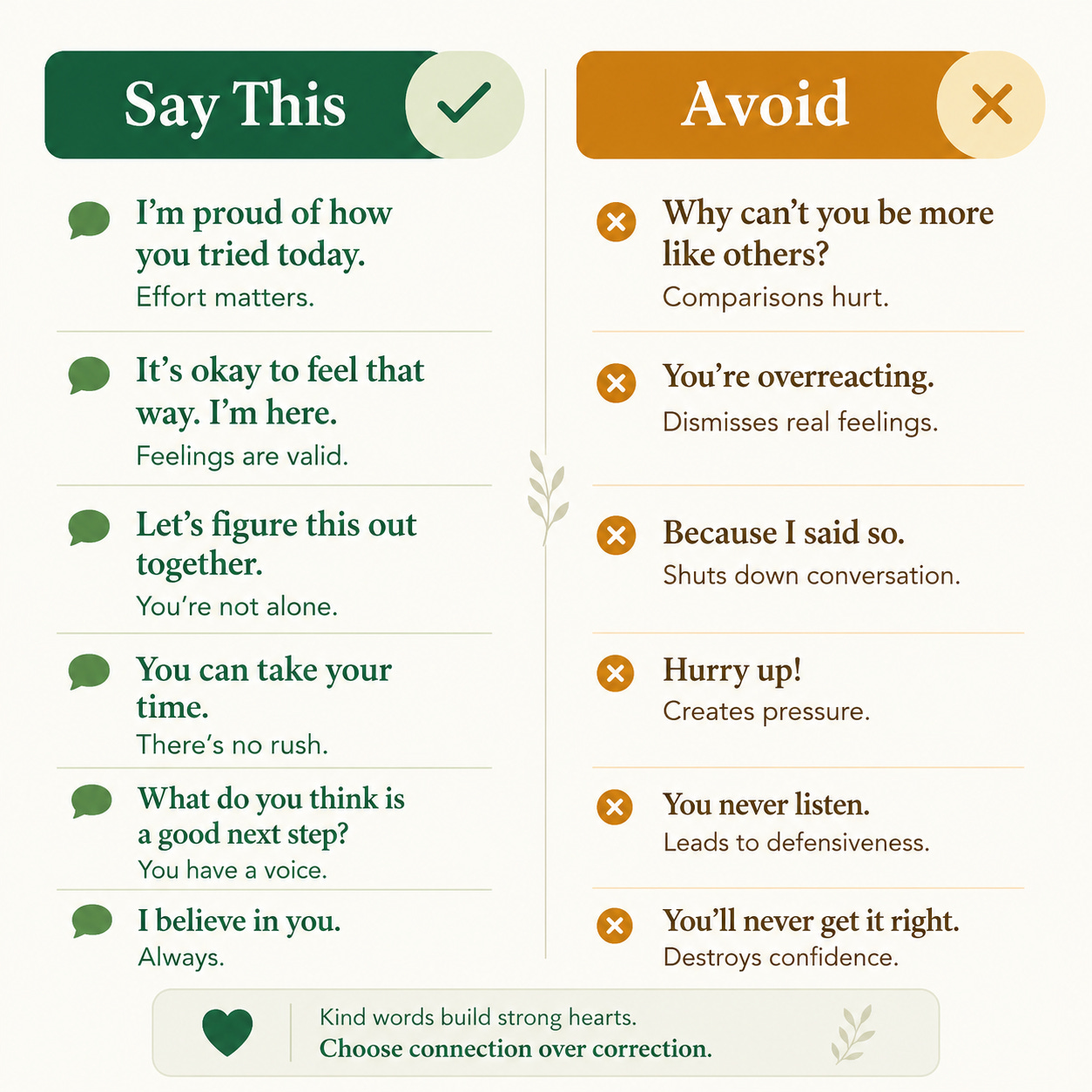
Be strong. Big boys don’t cry. Don’t upset your mum. You’re the man of the house now. Your siblings are watching you.
None of it is meant unkindly. Every one of these teaches a child that his feelings are inconvenient and he should put them somewhere else. A child who learns to hide grief doesn’t stop grieving. He just does it alone.
What helps is closer to: “It’s okay to cry. I miss him too.”
4. Listen more than you talk
Sometimes children don’t need advice. They need an adult who won’t interrupt.
If a child says “I miss my dad,” you don’t have to change the subject or fix anything. Try “I know you do. Tell me what you miss most about him.” That question sometimes opens into a real conversation, and sometimes into laughter, because children remember the funny things first.
5. Reassure them that they are safe
After losing a parent, a lot of children quietly wonder whether the other one will die too. Who will look after them. Whether they might die.
Most never ask any of this out loud. Answer it anyway. Tell them they are loved and cared for and not going anywhere, and tell them more than once, because they will need to hear it more than once.
Still with us?
Get the next story like this one straight to your inbox.
6. Protect familiar routines
Grief upends everything, and routine puts some of it back. School, bedtime stories, family meals, whatever you did on Saturdays.
Children don’t need life to be perfect right now. They need to know roughly what tomorrow looks like.
7. Give them permission to remember
Many adults avoid mentioning the person who died, worried it will upset the child. Most grieving children are waiting for someone to bring him up first.
Look at photographs together. Tell the funny stories. Say his name out loud at his birthday.
I heard about a family once where nobody mentioned the father after he died. Not deliberately, it just never happened, and after a while the children started losing their sense of who he had actually been. Their mother noticed and wrote a book about him so they would always have something to hold. That has stayed with me.
8. Know the signs they need more help
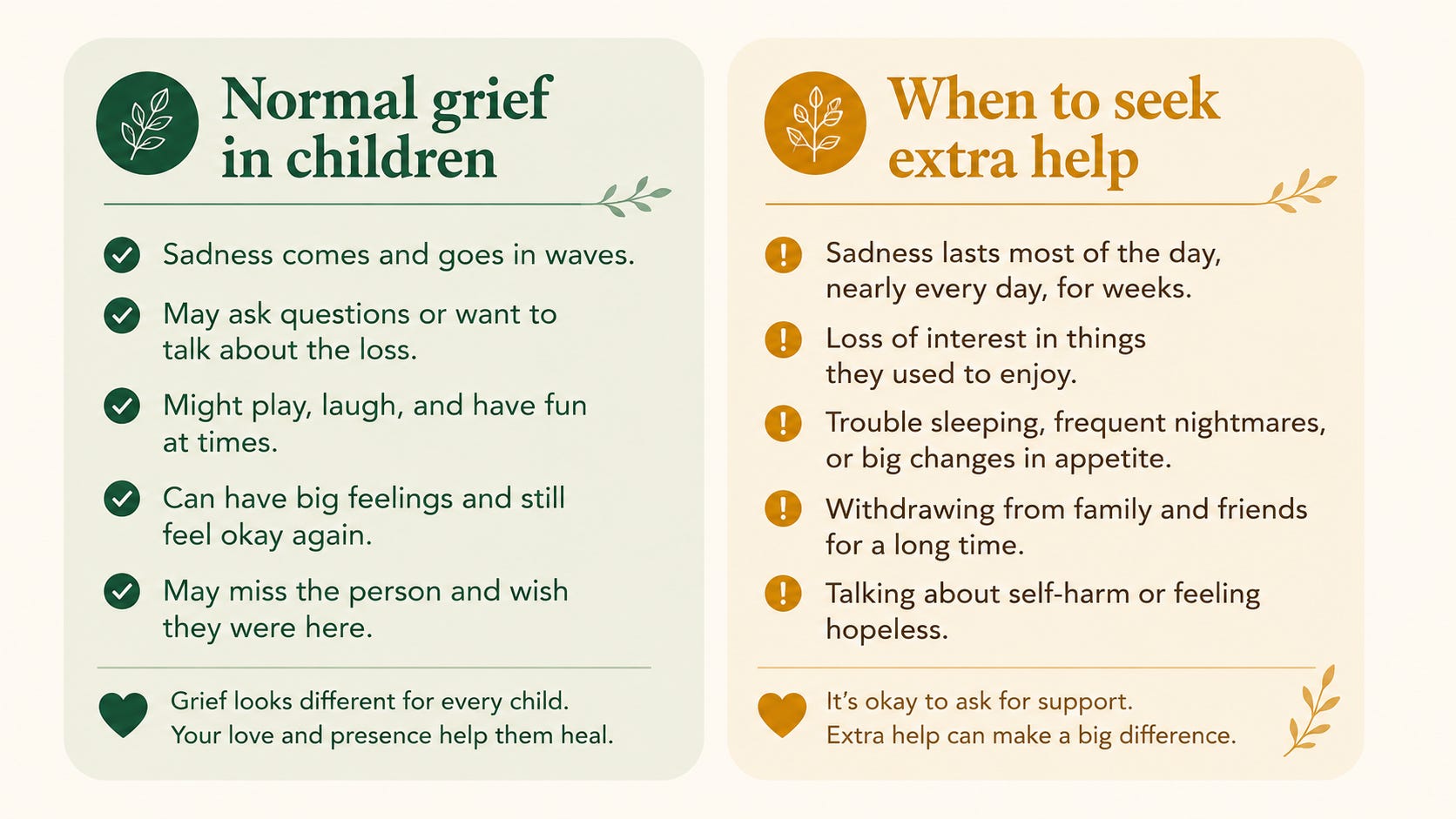
Every child grieves differently, and most steady gradually with love and time. Some don’t, and it’s worth knowing what that looks like.
Withdrawal that doesn’t lift. Sadness that never eases. Aggression or destructive behaviour. Big changes in eating or sleeping. School performance falling away. Constant anxiety. Losing interest in the things they used to love.
If any of this persists or gets worse, talk to a qualified child mental health professional. And if a child ever tells you they don’t want to be here, take it seriously and get help that same day.
Asking for help is care, not failure.
What a grieving child needs most
Children don’t expect us to fix their pain. They need someone who tells the truth kindly, listens without rushing them, lets them feel what they feel, and keeps showing up.
Mostly they need you there. The words matter much less than people think.
Supporting the child means supporting the widow
When a family loses a husband and father, the widow is carrying her own grief while trying to hold her children through theirs. She is comforting them on days she can barely stand up.
So supporting widows is also supporting grieving children. When a widowed mother is held, practically and emotionally, there is more of her left over for them.
That’s the work we do at Gritty Widows Foundation. Healing rarely happens alone. It happens inside a community that stays.

A child will rarely remember whether you found the right sentence. He’ll remember how you made him feel.
So sit with them, listen, answer honestly when they ask you something hard. Tell them they are loved and safe and not alone in this, and then tell them again next week.
If a grieving child in your life is struggling, please reach out to a qualified child counsellor or therapist. In Nigeria, the Cece Yara 24-Hour Child Helpline (0800 800 8001) offers trained support for children. If a child ever expresses thoughts of not wanting to live, seek professional help immediately, or get them to the nearest hospital.
At Gritty Widows Foundation, we support widowed families, mothers and children together.
With you in it,
Grace,
Gritty Widows Foundation
Raising a family alone is hard. We're here to help.
When He Asked About Daddy
A little boy's question reveals the invisible weight widowed mothers carry every day, and why no woman should raise a grieving family alone.
Read next →