The Village That Showed Up
What one widow taught me about how we're supposed to carry each other
When Mama Chidi’s husband died, her neighbour started leaving a covered plate on her doorstep every evening.
Still with us?
Get the next story like this one straight to your inbox.
No note. No announcement. Just food, left quietly, for a woman who had stopped remembering to eat.
Mama Chidi says she didn’t know who it was for nearly two months. She would open her door in the evening and there it would be, still warm. On the nights she couldn’t get out of bed, that plate was sometimes the only reason she ate anything.
When she finally caught the neighbour setting it down, the woman looked almost embarrassed, like she’d been caught at something. All she said was, “I know what it is to be alone in a house.”
I think about that neighbour a lot.
She wasn’t rich. She didn’t run a foundation. No training in grief, no plan, no programme. She had a pot of food and a memory of her own hard season, and she decided that was enough to act on.
That’s the whole thing, really. That is what being human is meant to look like.
We talk so much now about being self-made. Standing on your own two feet, not needing anyone, handling your business. And there’s something in that. The widows I work with are some of the most self-reliant women alive, they’ve had no choice in it.
But somewhere we started confusing being strong with being alone. As if needing people is a failure. As if the point of life is to reach a place where you don’t require anyone.
Widowhood exposes that fast. The day your person is gone, all that self-sufficiency hits its limit. You can’t be your own shoulder to cry on. You can’t be at your child’s football match and at work and at the stove and inside your own grief, all at once. Nobody can. We were never built for it.
Mama Chidi didn’t need a lecture on resilience. She had resilience coming out of her ears. What she needed was a warm plate on a doorstep. Someone who remembered she was there.
And here’s the part that stays with me. That neighbour never once thought of herself as doing charity. She wasn’t “helping the less fortunate.” She was being decent to the woman next door, the way she’d want someone to be to her. No distance in it, no them-and-us. One person who knew loneliness, reaching toward another.
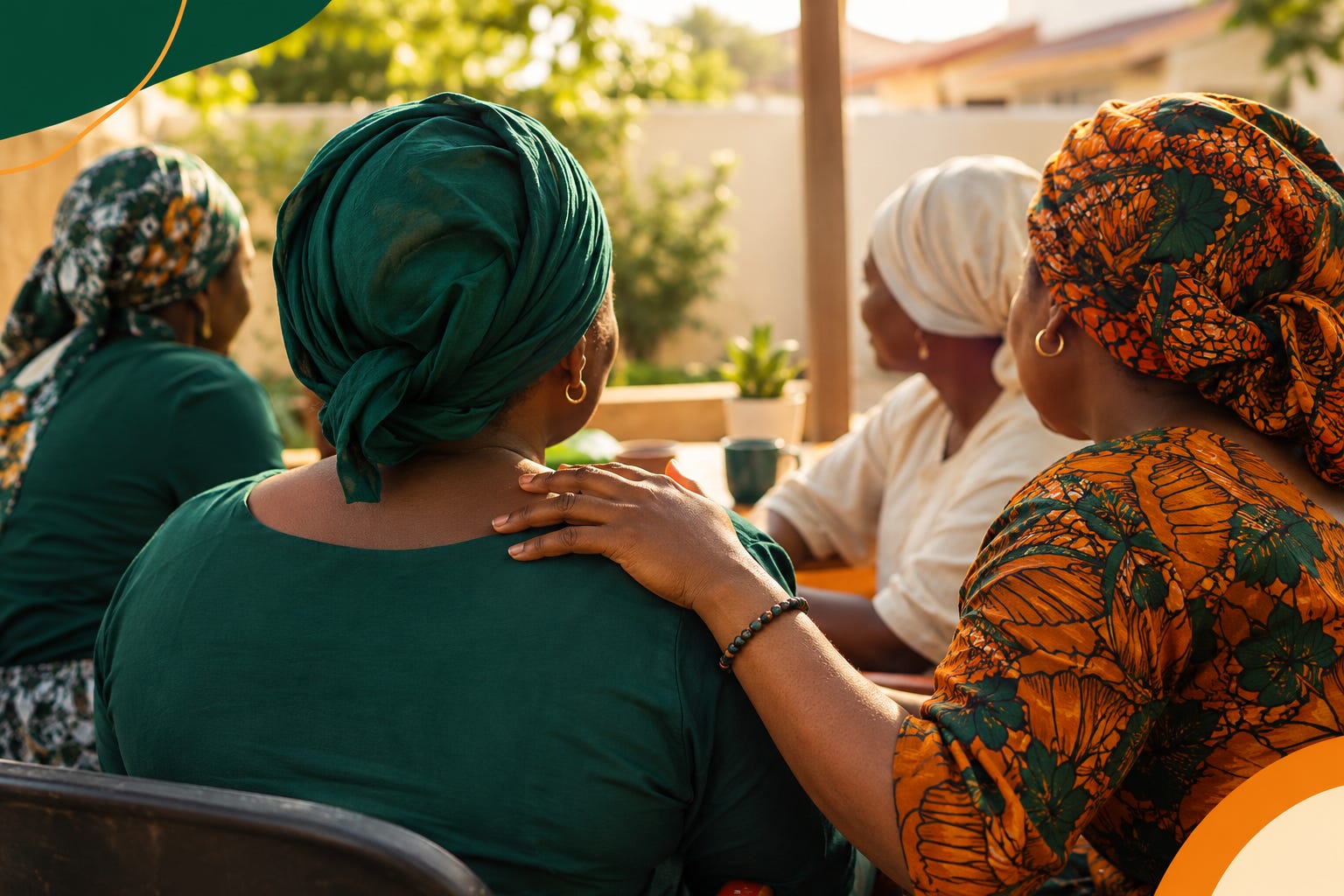
This is really what we’re trying to build at Gritty Widows Foundation. People assume the heart of the work is money, or programmes, or campaigns, and those matter, they truly do. But underneath all of it is something older and simpler. We’re trying to rebuild the village. To make sure no widow opens her door to nothing, and that when a woman’s world falls apart, there are hands, more than one pair, ready to help her hold it.
A foundation can send resources. But only people can send belonging. And it turns out belonging feeds a person too.
So this week, think of someone near you who is carrying something on their own. You don’t need a plan or a title or plenty of money. Sometimes you just need a covered plate and the willingness to leave it on a doorstep.
That isn’t small. It might be the whole thing.
💚 ONE THING TO REMEMBER
You don’t need to run a foundation to change someone’s week. You just need to show up.
With you in it,
Grace
Gritty Widows Foundation
Help us support widows and fatherless children in Nigeria.
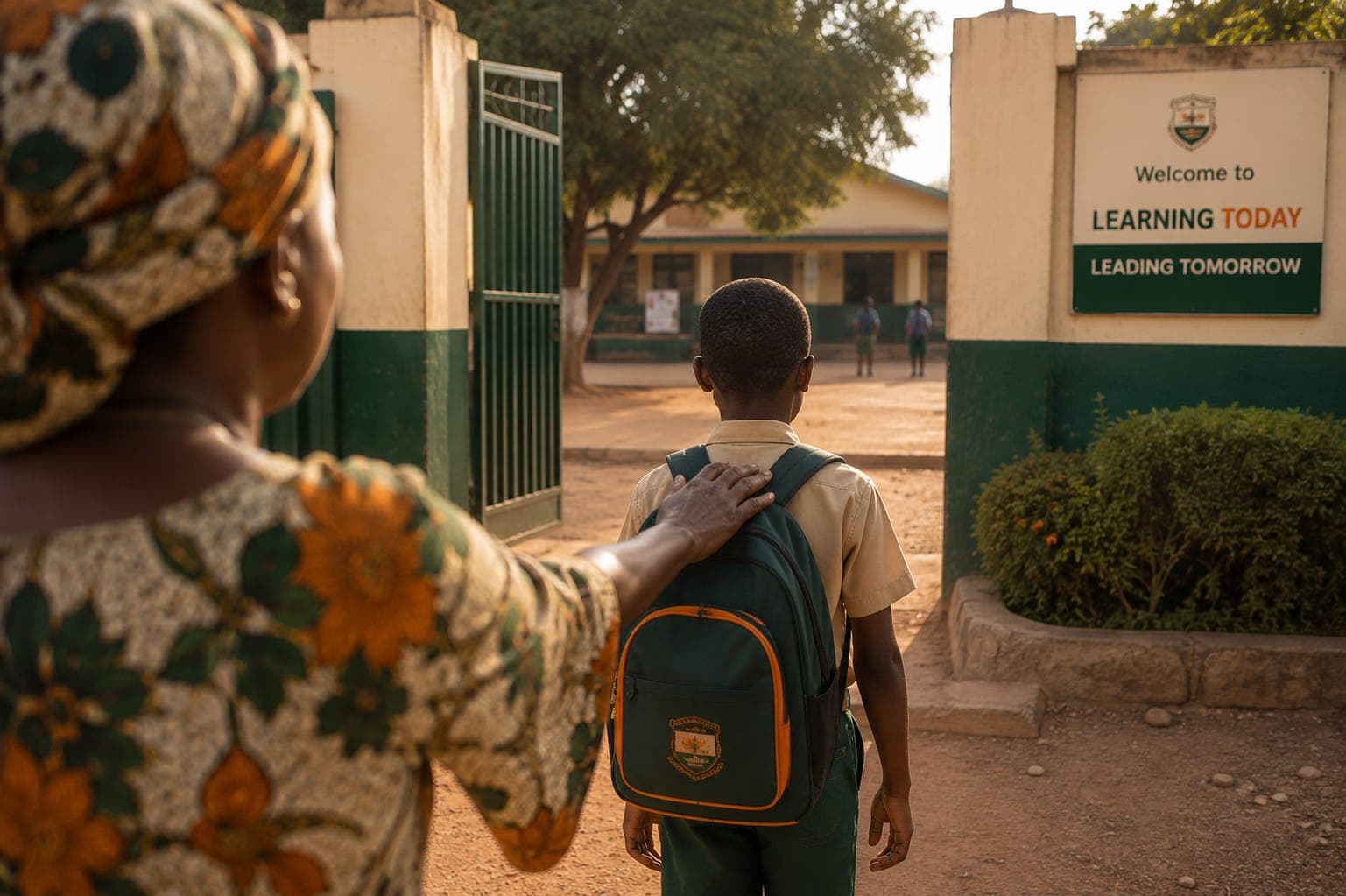
From Grief to Graduation: How Widowed Families Keep Their Children in School Against the Odds
Real grit, real cost, and how communities can help a widow’s child stay in the classroom
Read next →