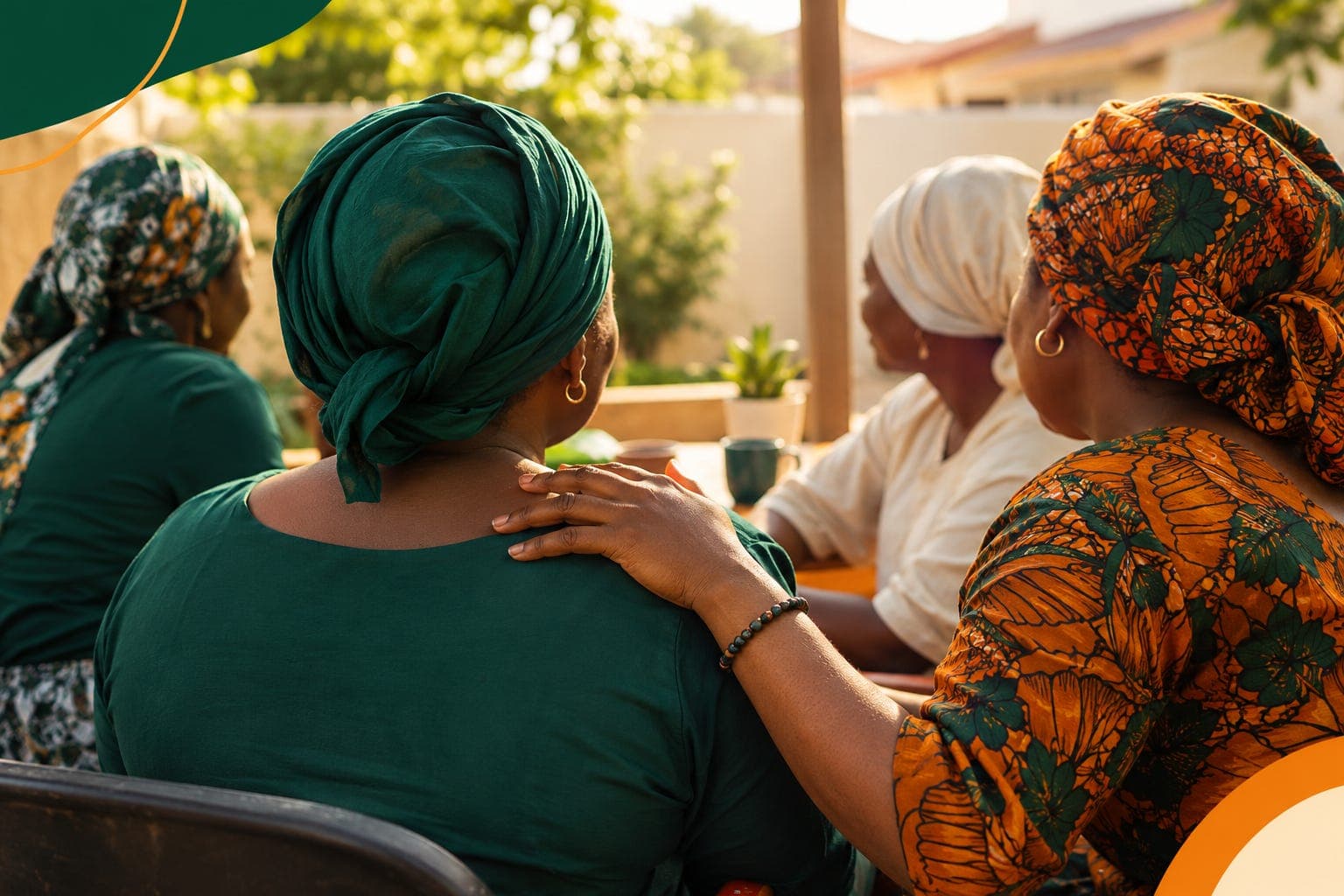
How to Support a Grieving Widow's Mental Health: A Practical Guide
What to say, what to avoid, how to spot the warning signs, and when to encourage professional help

Most people genuinely want to help a grieving widow. They just don’t know how what to say, what to avoid, or when ordinary grief has become something that needs professional care.
This guide is designed to give you those tools. Whether you’re a family member, a friend, a faith leader, or a colleague, here’s a practical framework for supporting a widow’s mental health well.
First, understand what you’re supporting
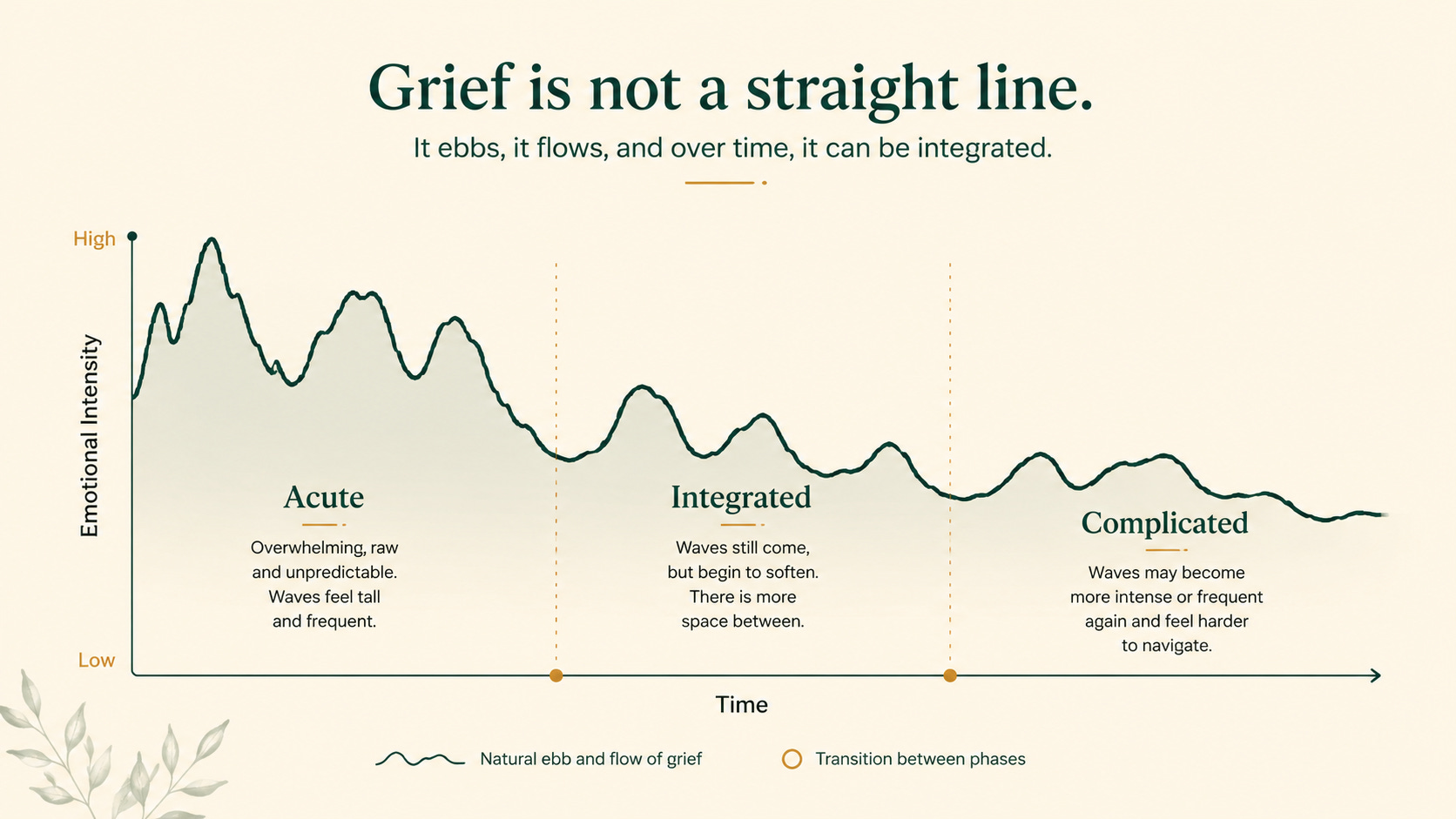
Grief after losing a spouse is not a single feeling it moves through recognisable stages and forms. Knowing them helps you respond to what’s actually in front of you.
Acute grief (the first weeks and months): intense, raw, often physical. Crying, numbness, difficulty sleeping or eating.
Integrated grief (the longer arc): the loss becomes something she carries rather than something that overwhelms her daily. This can take a year or far longer and there is no “correct” timeline.
Complicated grief: when grief stays frozen at the acute stage for many months without easing a sign professional support may be needed.
Understanding where someone is helps you meet them there, instead of expecting them to be somewhere they’re not.
How to have a supportive conversation
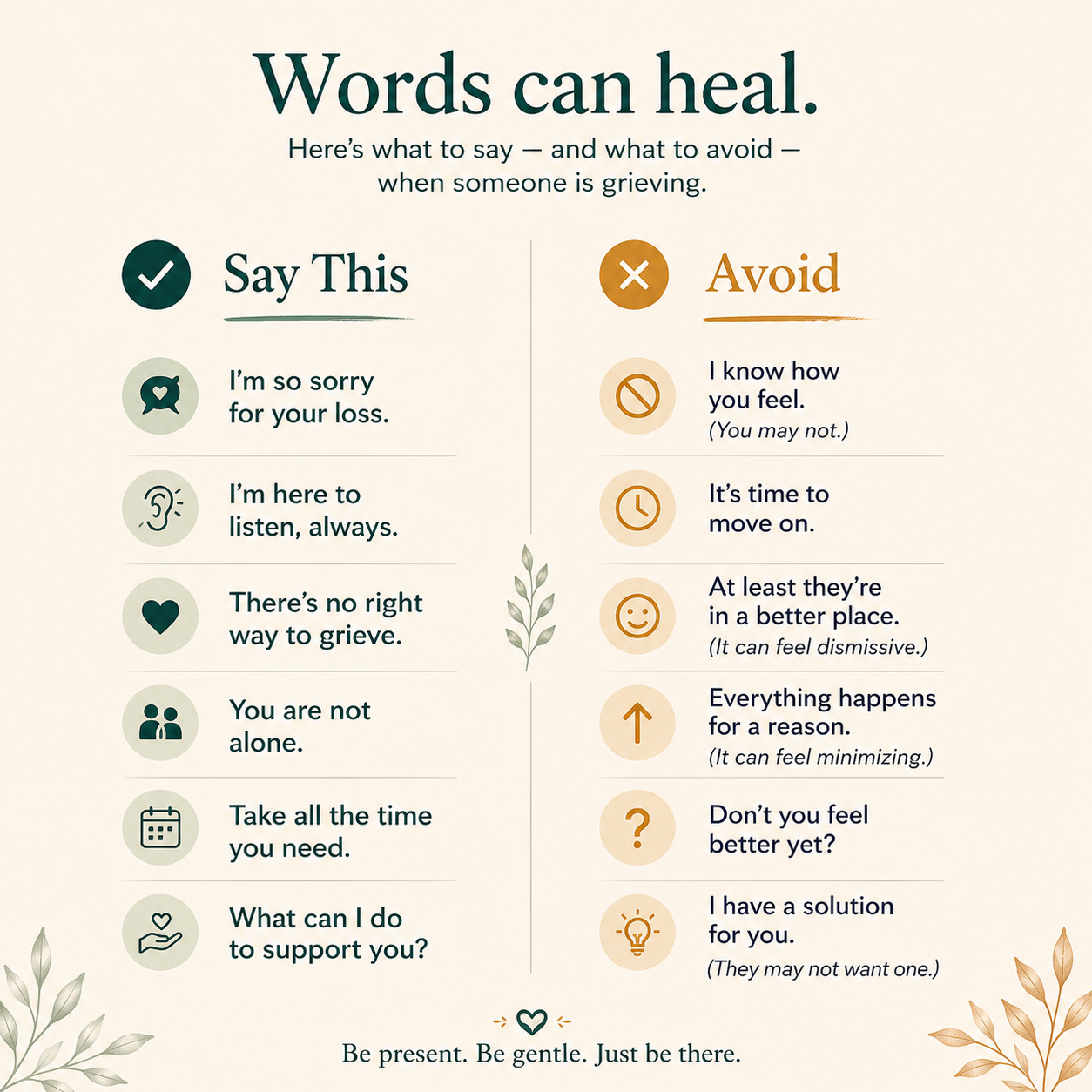
This is where most people freeze, afraid of “saying the wrong thing.” Here’s a simple, reliable framework.
Do:
Acknowledge the loss directly: “I’m so sorry. I’m here.”
Use her husband's name, because it tells her he hasn't been forgotten
Ask open questions: “How are you really doing today?”
Sit with silence; you don’t need to fill it
Avoid:
“Be strong” , it tells her to hide her pain
“Everything happens for a reason” ,it explains away grief she needs to feel
“At least…” ,it minimises
“You’ll move on” ,it puts a clock on her healing
A useful rule: you are there to witness her pain, not to fix it.
How to give support that actually reduces the load
Emotional support and practical support are connected — lightening the mental load is mental-health care.
Still with us?
Get the next story like this one straight to your inbox.
Instead of “let me know if you need anything” (which she’ll never take up), offer specific, time-bound help:
Name a task and a day: “I’ll bring dinner Tuesday.”
Take a recurring burden off her: a weekly school run, a market trip
Handle a “grief admin” task: paperwork, calls, forms she’s dreading
Specific beats open-ended, every time.
How to recognise when it’s more than grief
This is the most important section because knowing the difference can save a life.
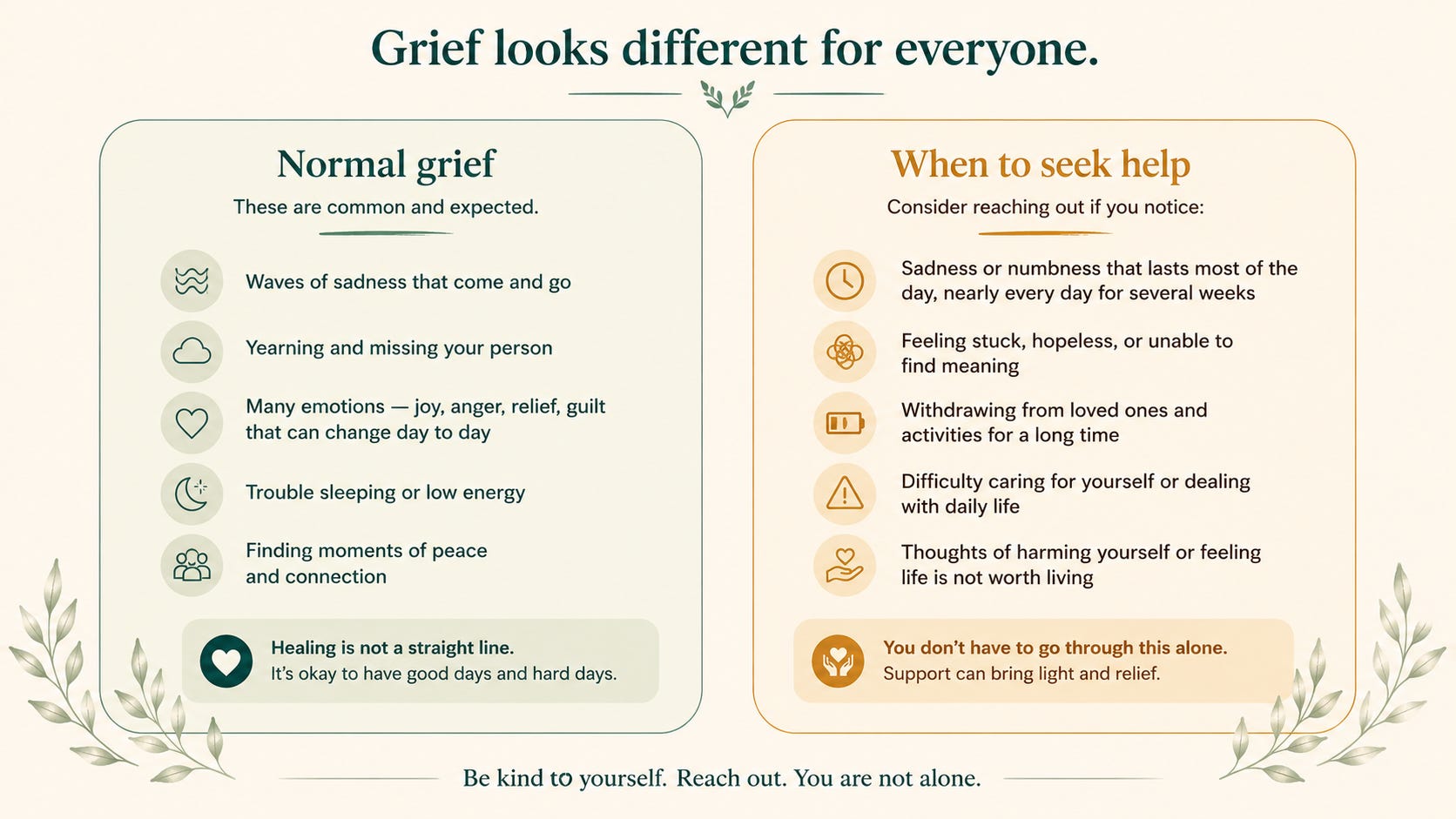
Normal grief comes in waves and slowly, unevenly softens. Watch for these warning signs that a widow may need professional support:
Withdrawing from everyone for weeks, with no lifting
Neglecting basic self-care (not eating, washing, getting up)
Expressions of hopelessness, worthlessness, or “everyone would be better off without me”
Inability to function months on, with no gradual improvement
Turning to alcohol or other substances to cope
If you notice these especially any mention of not wanting to be here take it seriously. Gently encourage professional help, and if there’s any hint of self-harm, help her reach a doctor or a crisis line that day.
How to encourage professional help without shame
In many communities, therapy carries stigma. Here’s how to open the door gently:
Normalise it: “Talking to someone helped me / a friend so much.”
Frame it as strength, not failure: “Getting support is one of the bravest things you can do.”
Offer to help with the practical step: finding a counsellor, booking, going with her
Never force it plant the seed, and keep the door open
How communities can build lasting support
Individual kindness matters, but structures sustain healing. If you lead a group, faith community, or workplace, consider:
A widows’ support circle where women who’ve walked the road support each other
A simple rota so support continues past the first few weeks
Awareness of local, affordable counselling resources you can refer to
Actively including widows in gatherings, rather than waiting for them to ask
A note for the widow herself
If you are the one grieving: what you feel is not weakness, and it is not forever. Healing is not linear, and there is no deadline. Reaching out for support to a friend, a counsellor, a community is one of the strongest things you can do. You do not have to carry this alone.

Grief deserves patience, not deadlines. And no widow should walk this road alone.
In Nigeria, free confidential support is available: SURPIN runs a 24-hour helpline on 0800 0078 7746, and Mentally Aware Nigeria Initiative (MANI) can be reached on 0809 111 6264.
💚 At Gritty Widows Foundation, we care for the whole woman — including her mental health. Support our work | Volunteer
With you in it,
Grace
Gritty Widows Foundation
Ready to put this into practice? Join us as a volunteer.

Education, Community and Mentorship: How to Truly Support Low-Income Widowed Families
Why keeping a child in school takes more than school fees, and how a village can change everything
Read next →