From Relief to Resilience: How Widow Empowerment Actually Works
Moving beyond temporary help to lasting transformation
Relief is easy. Write a cheque, hand over a bag of rice, feel good about helping. Empowerment is hard. It takes time, strategy, follow-through, and a real belief that a struggling widow can become a thriving business owner.
Most organisations choose relief. It’s faster, cheaper, and it looks good in an annual report.
But relief doesn’t change a life. It just postpones the crisis.
At Gritty Widows Foundation, we’re choosing the harder path, because low-income widows in Nigeria don’t need handouts that run out. They need tools that last. Here’s what that actually looks like.
The relief trap
It’s worth being honest about what most “widow support” looks like in Nigeria. An organisation finds a struggling widow, hands over a food package, maybe adds ₦10,000 or ₦20,000 in cash, takes photos for social media, and moves on to the next person.
Three months later the food is gone, the cash is spent, and the widow is back where she started, except now she’s learned to depend on help that may never come again. That isn’t empowerment. It’s dependency dressed up as charity.
Real empowerment isn’t about what you give. It’s about what you build. Relief asks what a widow needs right now, and answers with food, money, and sympathy. Empowerment asks what she needs so she’s never in crisis again, and answers with skills, capital, mentorship, community, and confidence. One buys temporary comfort. The other builds a way out.
The model we’ve built
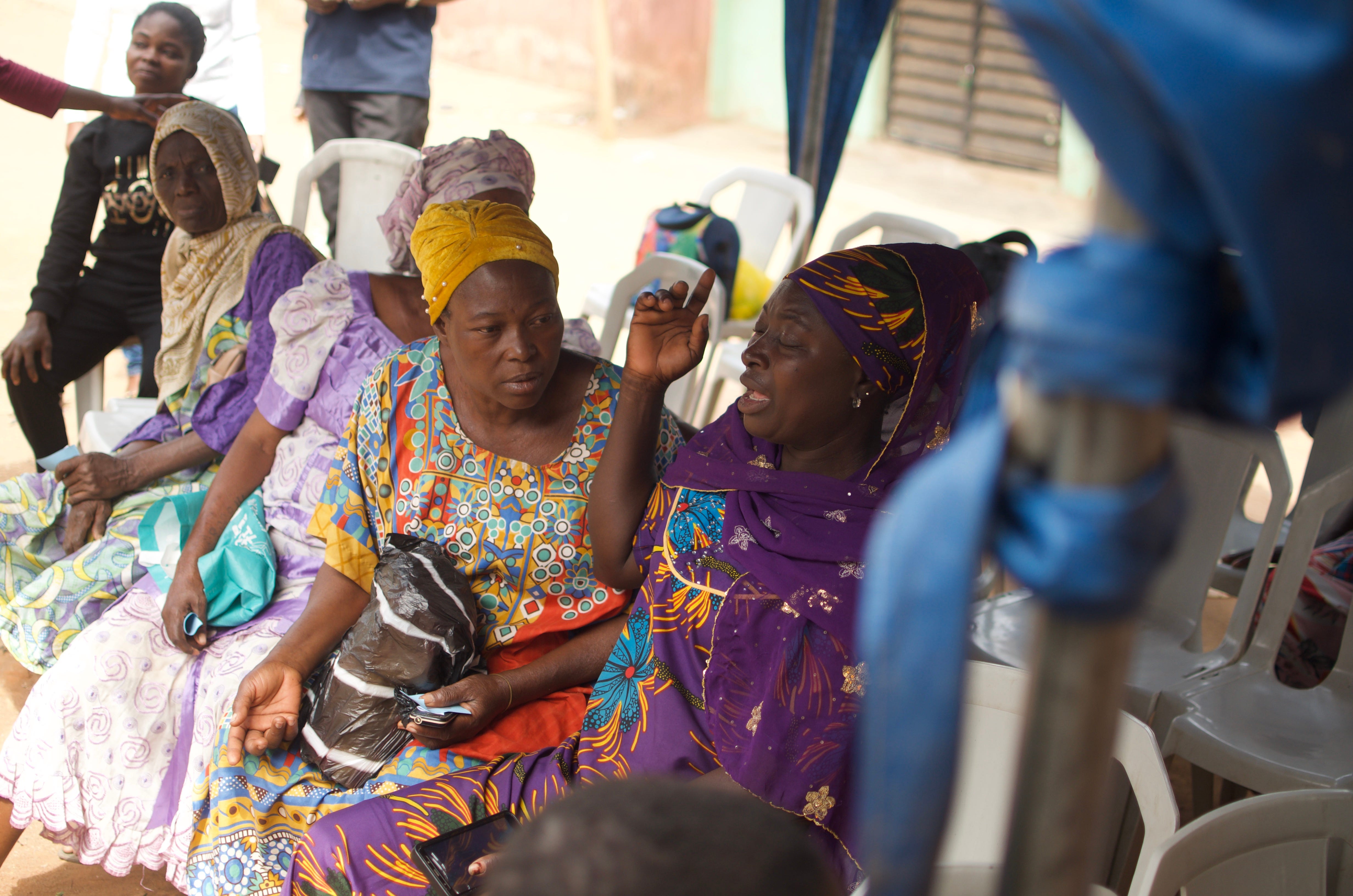
We’ve designed a five-stage empowerment model specifically for low-income widows. Here’s how it’s meant to work.
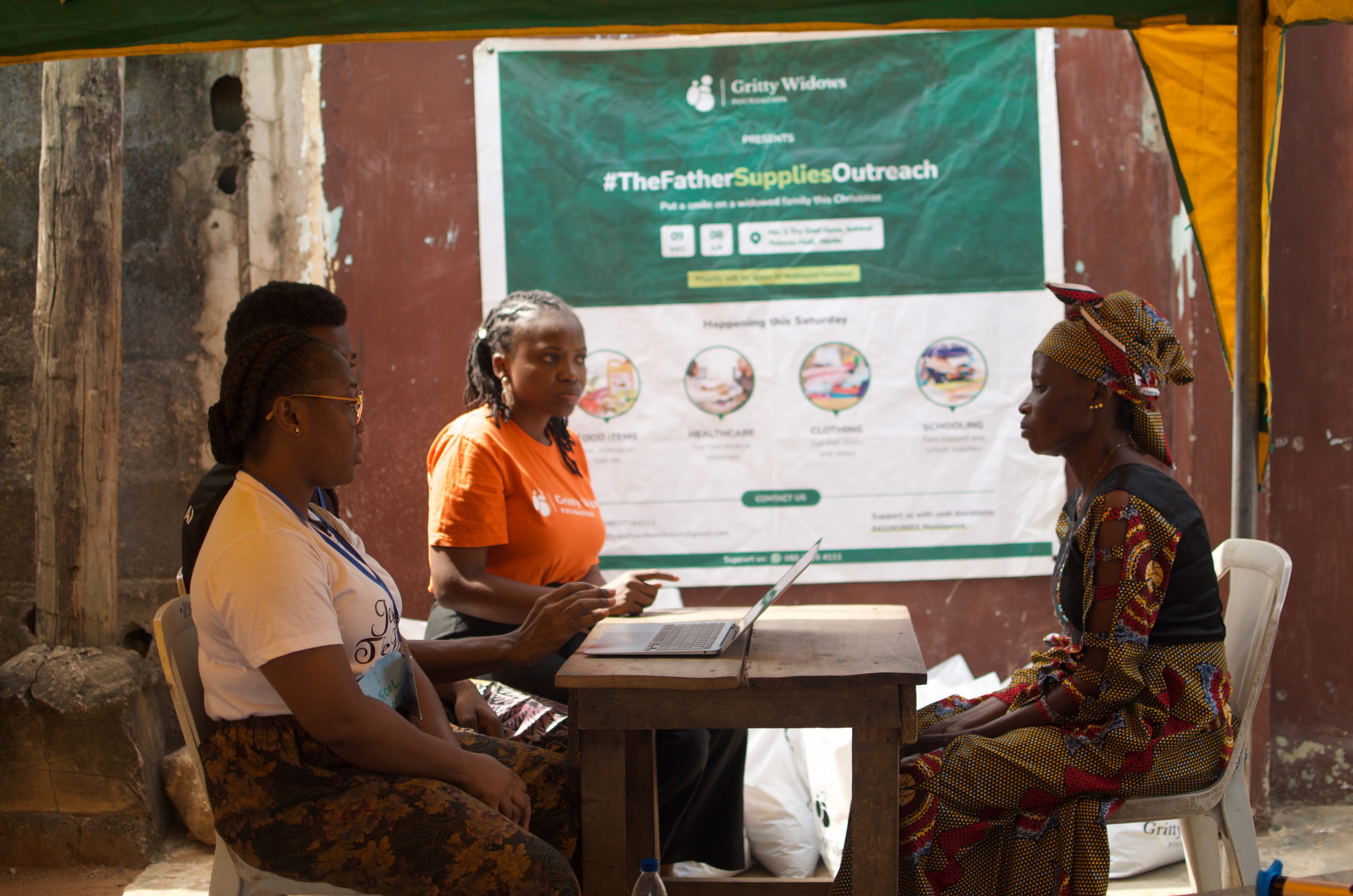
It starts with stabilising the crisis. You can’t focus on a tailoring class while wondering where your next meal is coming from, so the first month is about the basics. When we meet a widow, the first questions aren’t about which trade she wants to learn. They’re whether her children have eaten, whether she’s about to be evicted, whether anyone needs urgent medical care. Only once the immediate emergencies are handled can the real work begin.
Then comes skills. Over the next few months, the focus is intensive training in trades that actually earn money in her community, tailoring, soap-making, catering, hairdressing, small-scale farming, alongside the business fundamentals of pricing, marketing, and basic bookkeeping. We keep cohorts small so the attention is personal, we bring in instructors who run successful businesses themselves, and we make sure the practice happens with real materials, not just theory. Plenty of programmes teach the basics and send people off with a certificate. The harder, more useful thing is making sure a widow can produce work good enough that people will actually pay for it.
Then capital. Skills mean nothing if you can’t afford to use them. A widow who’s learned tailoring but can’t buy a machine or fabric isn’t empowered, she’s frustrated. So graduates receive startup capital scaled to their business plan, the equipment they need, initial materials, help registering the business, and support setting up a workspace, even if that workspace is a corner of the home. Funding is based on how viable the business is in her community, the skill she showed in training, and a clear plan for finding customers. One thing we don’t do is lend at interest. > Widows don’t need more debt. They need someone to invest in their potential.
Then mentorship, for the long stretch that follows launch. Most businesses fail not because the idea was bad but because the owner hit an obstacle and had no one to help her past it. So the months after launch mean regular check-ins with a mentor who’s run a business themselves: what to do when the sewing machine breaks and there’s no money to fix it, how to handle customers who don’t pay on time, where to find more orders, how to expand without overreaching. Good mentorship isn’t only problem-solving. It’s steady contact, celebrating the wins, and building confidence alongside the business.
And finally, multiplication. Real empowerment doesn’t stop at one widow. The women who come through the programme start mentoring newer ones, pooling savings into cooperatives, forming networks to buy in bulk and market together, and learning to advocate for their own rights. The picture we’re working toward is a widow who finished her tailoring training months ago now running her own business and training two other widows, turning one changed life into several.
The metrics that matter
Most organisations measure success by counting: “We helped 500 widows this year.” But helped how, for how long, with what lasting change?
We’d rather measure the things that show real transformation: whether a widow is earning a sustainable income six months after training, whether her children stayed in or returned to school, whether she’s taken on an apprentice, whether she’s mentoring another widow, whether her family has climbed above the poverty line. The question underneath all of it is simple. Is this widow better off in six months, or just better off today?
What’s genuinely hard about this
I don’t want to pretend any of this is easy.
There’s the tension between scale and depth. We could reach far more widows with one-time relief, but we’re choosing a deep impact with fewer women because that’s what actually changes anything. Our first EmpowerAWidow cohort is small on purpose, because each widow represents a twelve-month commitment, not a photo and a handshake.
There’s the difficulty of measuring the things that don’t show up in a spreadsheet, restored confidence, renewed hope, the shift from “I’m a burden” to “I’m a business owner.” We plan to track both the hard numbers and the quieter, self-reported changes, because both are real.
There’s funding. Empowerment is expensive and relief is cheap, and donors often prefer the ₦50,000 that “feeds a family” over the larger sum that trains a widow for good. Our answer is radical transparency about what things cost and what they produce, and building long-term partnerships with funders who understand that transformation takes time.
And there’s failure. Not every widow will succeed. Businesses fold, personal crises derail progress, some people give up. We treat that as part of the work, not a reason to walk away. When a widow struggles is exactly when she needs us most.
What success actually looks like
Success isn’t a straight line. It’s messy and personal. In the model we’re building, it might look like a widow finishing training and making her first sale, then a few months later holding a handful of regular customers, then saving enough to pay school fees without borrowing, then a year on training her first apprentice and steadily growing.
But success also looks like the things that don’t fit on a chart. A widow who doesn’t cry herself to sleep anymore. Children who stop worrying about being pulled out of school. A woman who introduces herself as a business owner instead of a widow. A family planning for the future instead of surviving the present. That’s the transformation we mean.
From charity to partnership
The biggest shift in how we think about this is in the language. We don’t want “beneficiaries.” We want partners. We’re not trying to help the needy, we’re investing in potential. We’re not giving to widows, we’re building with them. Empowerment isn’t something you do to people. It’s something you do with them.
The programmes making this real
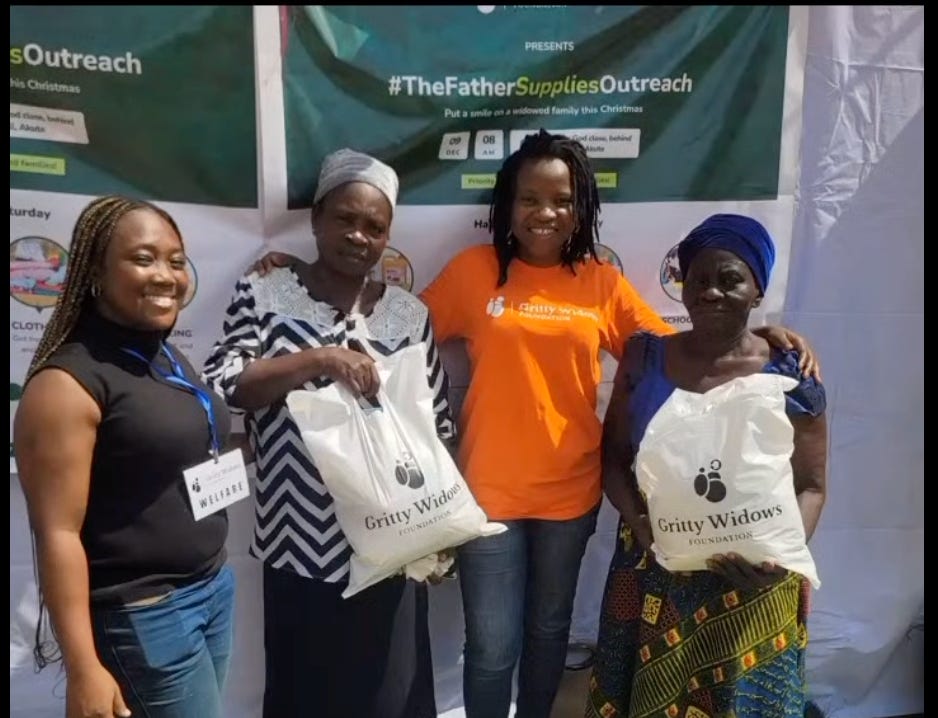
We’re not only theorising. EmpowerAWidow is built around a small first cohort and twelve months of comprehensive business-launch support, and we’re recruiting for it now. BackToSchool connects donors directly with children from widowed families, because empowering a widow means little if her children can’t stay in school. HealthAccessDrive builds healthcare partnerships so a medical crisis doesn’t wipe out the economic progress a widow has made.
Here’s the honest reality. These programmes are designed and ready, but not yet running. We’re raising the funds, building the capacity, and learning as we go. The model is sound, the need is urgent, and we’re committed to getting it right rather than getting it fast.
What you can do
If you believe in empowerment over relief, you can fund a widow’s transformation and change a family’s whole trajectory. You can sponsor a child’s education and keep them in school for a term. You can mentor a widow building a business and hand over expertise she can’t easily find. Or you can share this and help more people understand what real transformation actually takes.
Help us support widows and fatherless children in Nigeria.